Uncategorised

Young Peoples Project

The Maritime Heritage Trust

Your Vessel; Their Future

How to engage young people with their maritime heritage

Why is it important to engage young people?
  • Young people can benefit from these visits through learning more of their local history, developing new skills and learning about job opportunities.
  • By engaging with young people vessels can reach a wider audience and inspire future generations to support their local heritage vessel.

Some vessels and museums have excellent youth and community programmes and MHT is keen to develop user friendly advice on how to extend this across the sector.

During August and September 2025, three youth engagement activity days were run with Steamship Shieldhall in Southampton and one with the Helen II in Conwy.

A donation from The Lois Cumbers Charitable Foundation enabled us to fund the engagement of Keystone Heritage, a consultancy specialising in working with schools and young people, to organise those visits and prepare this report.

View Full Report  (8mb PDF)>>

Contents include:

  • Best practice in organising a youth project for your vessel
  • How to organise a school visit and how to contact schools
  • Risk Assessments and Safeguarding
  • School/youth group activity check lists
  • Public engagement
  • Case studies summary - The Steamship Shieldhall, Southampton; The Helen II, Conwy
  • Case studies summary - The Steamship Shieldhall, Southampton; The Helen II, Conwy
  • Case studies summary - The Steamship Shieldhall, Southampton; The Helen II, Conwy
  • Summary of lessons learned and Recommendations

Read more …Young Peoples Project

  • Hits: 2382

Transformed by War

The Exhibition Panels

The panel image and title opens pdf's in a new window

  • Transformed by War

  • Threat of Invasion

  • Use of west coast ports and creating a new one in the Clyde

  • Clyde Anchorage Emergency Port - wartime ingenuity?

  • Clyde Anchorage Emergency Port - making it work

  • Defending the small ports and rescuing allied airmen

  • Coastal communities respond to attacks

  • Admiralty takes control of all shipbuilding

  • Canals and the 'Idle Women'

  • Coastal shipping lifeline

  • The ports crisis

  • Women trained as shipbuilders solve a key shortage

  • Coastal areas provide essential training for D Day

  • Would requisitioned coastal land and property be returned

Main sources - National Archives (Kew), British Newspaper Archive, material supplied by individual Heritage Harbours
Images as indicated and from photographic archive of Imperial War Museum under IWM Non Commercial Licence.
Text extracts from CI Savage (Official History ww2) Inland Transport 1957 HMSO and "Wartime Britain 1939-1945" Juliet Gardiner, 2004 ISBN 978-0-7553-1028-9

Read more …Transformed by War

  • Hits: 8471

Key Aims

Heritage Harbours - Key Aims

Heritage Harbours and Heritage Inland Ports are places that support the UK’s national fleet of historic vessels and whose heritage and environment are actively promoted by the local community.

The following 10 goals represent a shared approach by partners to help them survive and thrive.

1. If you like historic vessels, keep working yards and workshops open

Maritime heritage is about more than vessels – working yards, drydocks, harbourside facilities , buildings and history sites are interdependent. A surviving boatyard or drydock may look rather “industrial” but is vital to attract and retain historic vessels as is the space for related craft based businesses which can be a visitor attraction in themselves.

  • 2a

  • 2b

2. Ensure new development improves access from town to harbour.

Retaining and opening up connections between waterfronts and the town centre is vital; good access on foot and by vehicle helps business and heritage and should be included in local plans. Studies with local authority input can help support this. Waterside housing is highly sought after but should allow for operational space for vessels. Enforceable Planning Conditions should require this as well as improved public access.

  • 1a


  • 11a

3. Retain quayside open space and keep harbour facilities working

Retaining and opening up connections between waterfronts and the town centre is vital; good access on foot and by vehicle helps business and getting policies into a Local Plan (or getting a Supplementary Planning Document adopted) is a secure way of ensuring the relationship between water and land is maintained. Studies with local authority input can help support this. Redevelopment of waterfront sites for housing should improve public access, safeguard heritage features and allow for operational space for vessels.


  • 3a

  • 3b

4. Safeguarding heritage in redevelopment

When a building becomes redundant the challenge is to find viable re-use or retain key features through redevelopment. Reuse also saves embodied carbon https://historicengland.org.uk/images-books/publications/energy-efficiency-and-traditional-homes-advice-note-14/   Developing or adding to the local list of significant buildings and structures, working alongside the local authority and Conservation Officer will also help safeguard heritage in planning decisions. Where relevant, apply for a building or feature to be assessed for national designation. https://historicengland.org.uk/listing/apply-for-listing/

  • 4a

  • 1b

5. Influence local planning decisions

Safeguarding a Heritage Harbour, particularly in terms of possible uses of different sites is often a matter of local planning – particularly developing a vision of what is wanted. Ensuring that the harbour heritage is well reflected can be strengthened through community action, including preparation of a Neighbourhood Plan. This will have more weight if it includes a larger area than just the harbour so that it can have greater influence on new development.

9a

6. Increase public access all along the waterfront

Local green and blue open space is now valued more than ever and recognized for health and well-being benefits to the whole community. Projects to extend public access to enable greater enjoyment of the waterway and provide walks and trails attract wider local support as well as benefiting maritime heritage.


5a

7. Connect with new people through community engagement

Heritage Harbours can only be sustained in the future if the wider community benefits from cultural events, educational projects and more opportunities for activities on the waterway such as rowing, sailing and watersports. Heritage Harbours are well placed to promote and develop best use of the waterspace.

6a

8. Restore a living waterway

The health of waterways and the coastal environment in terms of biodiversity, water quality and the impact of climate change are key concerns for the future. Promoting wider use of the harbour waterway increases support for improving the environment, including action on water quality, safeguarding of key nature conservation sites and creation of new habitats.

9. Tell the story

Most harbours have a rich economic, social and cultural history which can be researched in local museums and archives and archaeological projects. Researching and promoting this through a variety of accessible, cultural programmes is a key priority for Heritage Harbours. Outputs could range from online and self-guided trails, information boards on converted buildings to much more ambitious artist-led events that interpret the area’s past

  • 8a

  • 8b

10. Work together

Many aspects of promoting and developing a Heritage Harbour will require co-operation and partnerships with a wide range of local and community organisations – waterfront and maritime businesses, charities, groups and individuals with a maritime focus. The wider the input the greater the support as the project develops.

10a

Three national organisations – National Historic Ships, Historic England and The Maritime Heritage Trust are providing support for Heritage Harbours, in MHT’s case by hosting the National Heritage Harbour Working Group. This brings the locations together to share experience, develop joint promotions and tackle common issues. 

Read more …Key Aims

  • Hits: 8729

Trustees

Trustees

Richard Albenese

Richard has had a wide experience of vessel and land based engineering and steam preservation projects variously acting as volunteer, full time project leader, consultant or Trustee.
This has included work as a Heritage Conservation Engineer advising on the care, erection and removal of large machines and work on displays and public engagement.
Projects have included the London Museum of Water and Steam (previously Kew Bridge Engines), the steam puffer Vic 32, Trinity Buoy Wharf and many others. Richard became a Trustee of Maritime Heritage Trust in 2019.

Henry Cleary

Henry acquired the steam puffer VIC 56 from MoD in 1978 and with the help of volunteers operated her until 2019 when she was gifted to Boathouse 4 in Portsmouth.
Alongside a career in the civil service, he  was involved in the formation of Heritage Afloat in 1994, has continued as Trustee of MHT (Chair since 2020) and recently completed 7 years as a Trustee of Heritage Alliance.
He sees the current challenge as to help MHT transition to a more sustainable future and to find new ways to support our wide range of maritime heritage.

John Evans

Sailing has been a consistent thread through life, intertwined with my professional educational career.
I believe I am in a good position to offer a long term view of the need for developing maritime heritage in all its forms – especially in the training of skills for young people – skills learnt in the industry are uniquely appliable across a wide range of land based activity – so heritage and skills development must go together -even in the 21st Century.
I have been a Committee Member of sailing clubs including Itchenor, Hamble, Norfolk Broads, Royal Southern YC, Hamble River YC and a volunteer with Cutty Sark/NMM.

Trevor Godbold

He has been a Trustee for 5 years but has been active with MHT for some years before that as Treasurer, Membership Officer as well as building and looking after our website - roles which he continues to fulfil.

Lives in Cardiff where he is also a Trustees of a heritage charity that seeks to try to tell the story of Cardiff Dock and Tiger Bay to a wider audience..

Ken Hamilton

He is a senior project officer with MSDS Marine and until recently was a National Listing Adviser with Historic England (HE), where, among other roles, he worked closely with MHT and others as HE lead on the Heritage Harbours project. At HE he was responsible for designation of heritage assets both on shore and offshore. Ken is a geophysicist with experience of working in archaeology and civil engineering and much of his professional career has been spent working in heritage management

Cat Holt

Passionate about preserving maritime heritage both above and below the water, I have a degree in Marine Archaeology from Bournemouth University, and a Master’s in Museum Studies from the University of Leicester and have completed an apprenticeship in Historic Ship Conservation with National Historic Ships UK.
I have worked on several significant maritime collections as well as acting as a consultant for The Shipwreck Museum in Hastings. In my current role at Dover Museum, I am responsible for the conservation of several static boats including the internationally significant Bronze Age Boat. I am also part of a small working group that maintains and operates the replica of the Bronze Age Boat.
I am also a Trustee and specialist tutor for the Nautical Archaeology Society, which is a charity whose mission is to Protect, Record and Research all forms of nautical heritage. I also act as chair of their Education Sub-Committee which works towards providing a diverse and high-quality education programme to our members and the wider public. 

Hannah Hurford

I have until recently been Chief Communications Officer with sail cargo company EcoClipper B.V. and have worked in the maritime heritage industry with organisations such as National Historic Ships UK and the National Museum of the Royal Navy.

I am committed to encouraging more diverse groups enter the sail cargo and maritime heritage sector, and for sailing to be attributed as an environmentally sustainable and feasible form of transport. I have been a Panellist on an online webinar discussing Diversity and Inclusion in the Maritime Heritage Sector, hosted by National Historic Ships. Young Trustee panellist for Heritage Alliance, Heritage Harbours Trustee support for MHT and Director, Lynher Barge

Delphine Jasmin-Belisle

Delphine Jasmin-Belisle is the Head Development & Membership for the Heritage Alliance, the advocacy body representing the independent heritage movement in England. Experienced fundraiser, she is dedicated to driving financial and operational resilience [Passionate about the sector’s sustainability, she]and has designed several sector support programmes including Heritage Digital and Rebuilding Heritage supporting over 2200 UK heritage organisations.[ In partnership with Timmus Research she delivered the DASH Survey 2021 which gathered the views over 4,500 heritage staff, and volunteers on digital skills and aptitudes. Previously, Delphine managed a portfolio of English Heritage sites across the Yorkshire Coast and Moors.] She grew up on the banks of the St. Lawrence's River where she fell in love with maritime heritage. Her years in Whitby showed her the importance of preserving heritage harbours.

Maddie Phillips

Joined MHT in 2020 after studying archaeology with a particular interest in maritime archaeology. She has worked for TS Rigging, Heritage Marine Foundation and is currently a shipkeeper on Cutty Sark.
Maddie’s interests include how historic ships and vessels could be considered as archaeological material, and in experimental maritime archaeology, replicating past vessels and technology in order to find out more about how they worked and to understand their limits.
Maddie is also interested in the operational maritime heritage, its protection (or lack of it) and the preservation of skills through continuing to use and maintain vessels.
She wrote her dissertation on Thames Barges and her Master’s dissertation on experiential archaeology, and managed and led a project to bring the sailing barge Blue Mermaid into the Royal Docks as part of Newham Heritage Month in 2021. 
She has been a keen sailor of various types of vessel from a young age.

Read more …Trustees

  • Hits: 13663

Members

Member Organisations

Sea-Change Sailing Trust
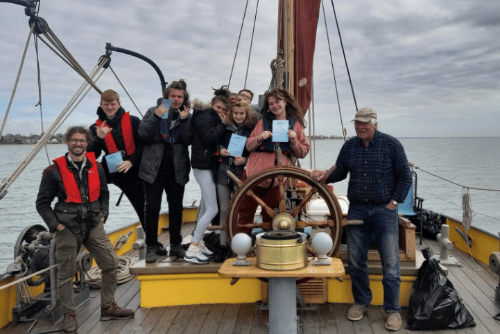
Sea-Change provides residential opportunities for young people and vulnerable adults to learn and develop in the unique environment of Blue Mermaid - a traditional Thames sailing barge'

Living onboard her with supervision by experienced staff,  they can fully participate in all the activities onboard, from handling sails and winding the windlass, to climbing the rigging and steering.

W: www.seachangesailingtrust.org.uk

Thames Sailing Barge Trust
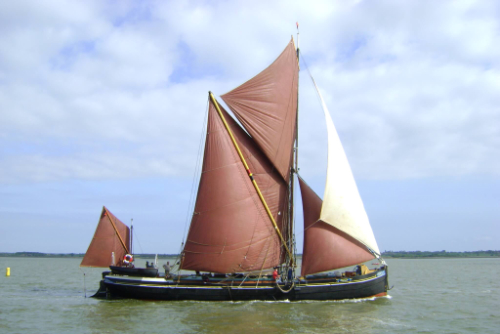
The Trust preserves two Thames barges - Pudge and Centaur - in sailing condition to pass on the skills required to sail them. 
Trips, which are run on various dates between April and October, are normally weekend or longer trips where there is on-board accommodation.  Occasionally there are also Full Day and Half Day trips.
The barges are un-rigged during the winter for maintenance and working parties meet on Maldon Hythe Quay to work on Centaur, Pudge and the workshop ‘Sailorman’, which is a former Thames lighter.

W: bargetrust.org

Steam Tug Brent
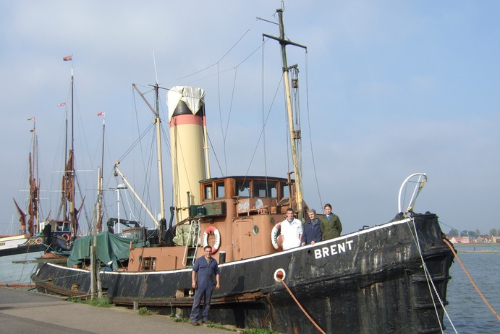
Brent is a classic small 'Lighterage' steam tug, a rare survivor of many hundreds which once worked around British and overseas dockyards, ports, coasts and rivers. She is now one of only four of this class left in the U.K. 
Based in Maldon the Trust is building up volunteer crew and supporters to ensure Brent's preservation and intends to provide training to apprentice heritage shipwrights, steam engineers and boiler makers whilst being restored and operated.
Opened to visitors spring and summer on static display

W: www.steamtugbrent.org

Hermitage Community Moorings
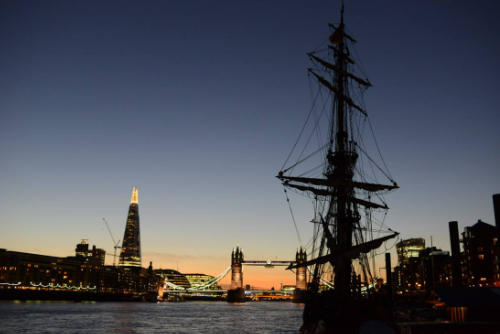
Hermitage Community Moorings (HCM) is a co-operative which built, owns, and operates a mooring on the Thames in Wapping. The mooring provides berths for up to 23 vessels: enabling a mixture of historic live-aboard barges, and visitor vessel use. HCM has created a small, close-knit community of people committed to boat use and the preservation of historic craft.

Part of its ambition is to ensure traditional river craft (e.g. sailing barges, tugs and motor craft) remain part of the Wapping landscape for future generations – and to create a local landmark that promotes Wapping’s historic links with the river.

W: www.hermitagemoorings.com

Historic Narrow Boat Club
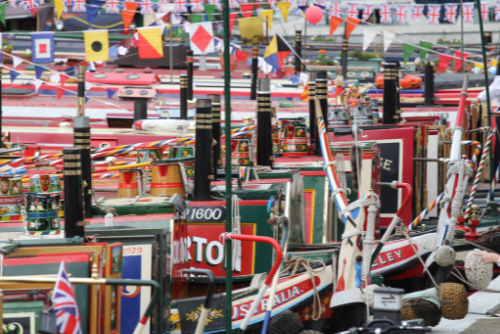
The Historic Narrow Boat Club was formed in 1966 and is dedicated to preserving the working heritage of UK canals, from the boats themselves to details of the waterways on which they travel.  HNBC is passionate about working boats, traditional skills, the built heritage, and the practices and courtesies of the working boat people.

As an active pressure group for navigational and waterway heritage interests, all who support our aims, whether boat owners or not are welcome.

W: hnbc.org.uk

Steamship Freshspring Society
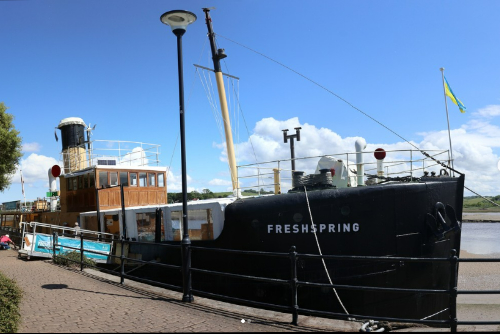
SS Freshspring is a historic steamship, recognised as being a vessel of National Importance. Built in 1946, she is the last of 14 Fresh Class water carriers.

Currently berthed at Bideford, as a static exhibit, the aim of the Steamship Freshspring Trust is to return the ship to operation, preserving the past to inspire knowledge for the future.

SS Freshspring is open every Sunday from Easter until the end of Octerber from 11am until 4pm.

W: ssfreshspring.co.uk

Nancy Blackett Trust
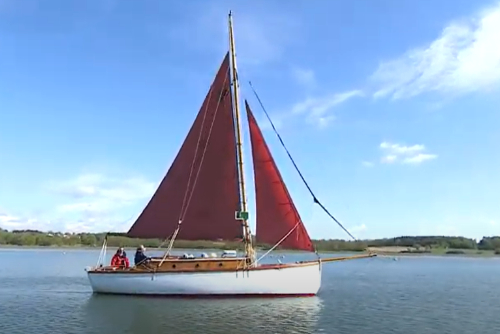
Arthur Ransome’s Nancy Blackett was his favourite among the various yachts he owned, and provided the inspiration for perhaps his best sailing novel, "We Didn’t Mean to Go to Sea."  She was named after the leader of the Amazon Pirates in his "Swallows and Amazons" books.

Nancy Blackett, rediscovered and restored, is now owned by the Nancy Blackett Trust,  Each year many Ransome fans enjoy the experience of sailing her, and many more visit her at maritime festivals.

W: nancyblackett.org

Waverley Excursions
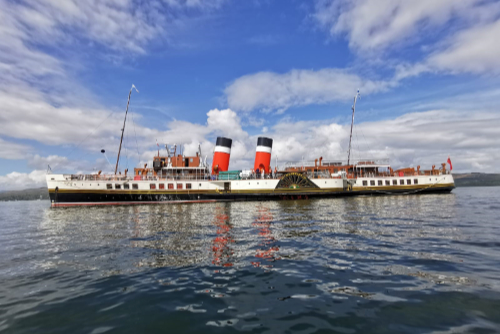
Waverley – the world’s last seagoing paddle steamer - has operated since 1975 carrying over 6 million passengers.

Waverley offers a wide variety of day, afternoon and evening cruises from over 50 ports and piers in several areas of the UK including Glasgow & the Clyde Coast, Oban & Inner Hebrides, Liverpool & Llandudno, the Bristol Channel, South Coast & Isle of Wight, and London & Thames Estuary.
The sailing programme can be viewed on the website.

W: waverleyexcursions.co.uk

Wooden Boatbuilders Trade Association
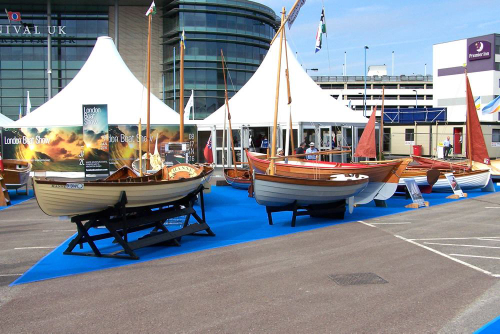
Established in 1990, the WBTA has an growing membership of boatbuilders and allied trades spread throughout the United Kingdom and beyond.

Boatbuilding contains a broad spectrum of materials, methods and skills, and the Association provides a centralised resource to both customers and those in the industry. Enquirers may be assured that whatever their requirements, be it construction, rebuild, repair, maintenance, or any associated service, a WBTA member will be able to provide the solution.

W: www.wbta.co.uk

Steamship Shieldhall
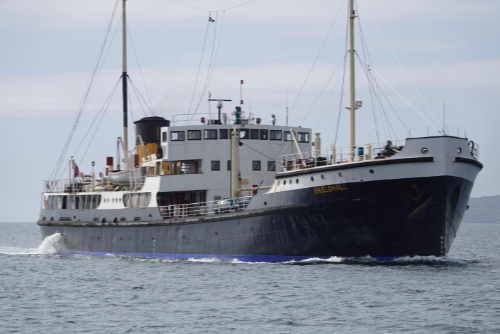
Steamship Shieldhall is the largest working steamship in Britain.  Experience the golden age of steam by booking on an excursion or visiting her in Southampton. As part of your Shieldhall experience, see the engine room with its original steam engines and the bridge, with its traditional instruments and gleaming brasswork; admire the ship’s steam assisted steering gear; talk to the Captain and crew and listen to the commentary while passing the sights of Southampton Water and the Solent.

Shieldhall is available for private charter or for hire as a venue alongside in Southampton, and offers a variety of courses for youth groups and steam enthusiasts.

W: ss-shieldhall.co.uk

Daniel Adamson Preservation Society

The Danny, as the ship is affectionately known, is a unique 1903 steamship which includes stunning Art Deco saloons which have been restored to exactly as they would have been in 1936, complete with, curved bar, wooden panelling and furniture which are evocative of a past time of shipping and celebration.

Tours whilst static are available as well as cruises along the picturesque River Weaver.

W: www.thedanny.co.uk

Paddle Steamer Preservation Society
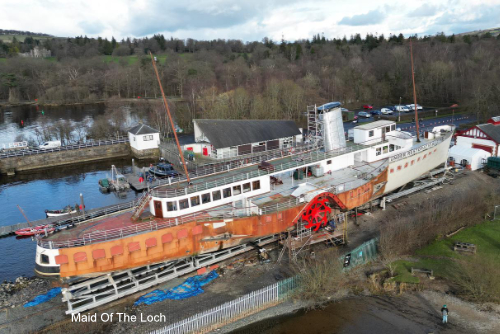
Through associated charities PSPS operates the only two working paddle steamers in Great Britain; PS Waverley and PS Kingswear Castle.and also supports other paddle steamer projects including PS Maid of the Loch and PS Medway Queen.

The Paddle Steamer Archive Collection is administered by the PSPS and forms the largest and most complete archive of material relating to paddle and pleasure steamers in the UK.

The PSPS has members across the world with five branches covering Great Britain. Each branch organises regular talks, social and special events throughout the year. 

W: paddlesteamers.org

South West Maritime History Society
The Society was founded in 1984. Its aims are to encourage interest in all aspects of our maritime heritage and to promote research in these fields, leading where possible to the publication of the result of such studies.

Members benefit from opportunities to futher their interest in maritime history, through a newsletter, Journal, visits and meetings to historic vessels and sites of interest in the South West.

W: www.swmaritime.org.uk

Paddle Steamer Kingswear Castle Trust
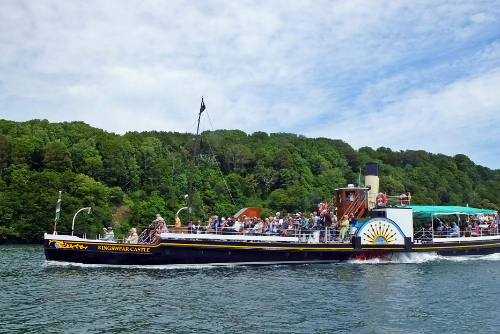
Paddle Steamer Kingswear Castle, known affectionately by her initials KC, is Britain’s last coal burning river paddle steamer.

She was built by Philip & Son of Dartmouth, Devon in 1924 for the River Dart Steamboat Company Limited for service on the River Dart. After restortion KC  operated from 1985 until 2012 on the rivers Medway and Thames, based at Chatham Historic Dockyard.
In December 2012 Kingswear Castle returned to her home waters on the River Dart after an absence of 45 years.  A year-long major rebuild commenced in winter 2021 it is expected that will see her return to service again in 2023.

W: www.kingswearcastle.org

Excelsior Trust
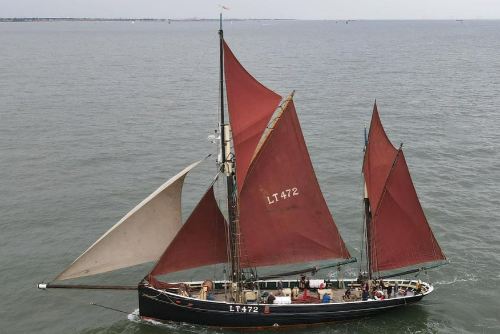
Excelsior is one of the last surviving Lowestoft fishing smacks. She was built in 1921 by John Chambers & Co of Lowestoft to trawl the southern North Sea. During the 1930s she was sold to Norway and converted to a motor coaster, removing her topmast and bowsprit and installing a wheelhouse on deck. She was used  around the Norwegian, Swedish and Danish coasts.

Excelsior returned  to her home port just over 50 years after she was built and restoration took 16 years and finally, in 1988, The Princess Royal commissioned Excelsior as a sail training ship. The following year she started a new career. 
Current voyage information is on the website.

W: theexcelsiortrust.co.uk

Steam Tug Kerne Preservation Society
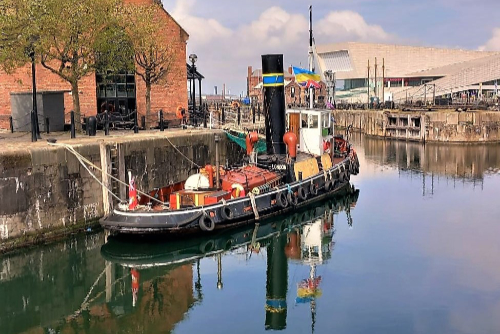
Built in 1913, she was originally named Viking. In April 1913, she was acquired by the Admiralty and re-named Terrier. Based in Chatham she worked in and around the Medway for 35 years, which included the two World Wars. She was sold in 1948, re-named Kerne, and worked on the Mersey, Manchester Ship Canal and Weaver Navigation as a lighterage tug until her retirement in 1971. The Kerne was about to go for scrap but was rescued her from the cutter’s torch and has now been wonderfully preserved for 50+ years.

During the Summer months the vessel can often be found berthed at the Maritime Museum in Liverpool and at other North West Ports.

W: www.tugkerne.co.uk

International 14 Dinghy Class

The Fourteens are one of the oldest dinghy classes in the world with connections back to before WW1.  It became an international class in 1928 and now has fleets around the world.
Fourteens are a development class, built to a basic set of rules that allows for innovation. Over the years designs have evolved from the beautiful wooden hulls of the 1920s to the carbon fibre machines of today which have twin trapezes, assymetric spinnakers and hydrofoils on rudders.
There are vintage and classic wings covering boats dating prior to 1983,

W: www.gbr.international14.org

Steam Tug Cervia

Designed as a Deep Water Steam Tug, 350ton Cervia (formally the Empire Raymond) is the last known survivor of England's Wartime fleet of 'Empire Ships'. A rare survivor from the pinnacle of steam ship development with her 1,000 horse powered triple expansion steam engines. Steam Tug Cervia was the last sea-going steam tug to work commercially in UK waters ending her working life in 1983. 

The Steam Tug Cervia now remains uniquely intact, berthed as a museum exhibit in Ramsgate Royal Heritage Harbour, Kent. The trusts aims are preservation and education, with easy public pier side access.

W. www.steamtugcervia.co.uk

Read more …Members

  • Hits: 17456